If you have ever stood in front of a wall of e-liquid bottles and felt completely lost by the numbers printed on the label, you are not alone. Terms like 6mg, 12mg, and 18mg show up on nearly every bottle, yet very few shops take the time to explain what they mean. Understanding vape juice strengths is one of the first and most important steps for anyone switching from smoking or simply trying to get more comfortable with vaping. This guide breaks down vape juice strength in plain language, without the confusing jargon that usually comes with it.
Picking the right vape juice strength is not just about personal preference. It affects your throat hit, how satisfied you feel after a puff, and even how much you end up vaping throughout the day. Get it wrong and you might end up coughing constantly or, on the other end, chain vaping because your device is not giving you enough nicotine. Get it right and vaping becomes a much smoother experience from the very first day.
What Vape Juice Strength Actually Measures
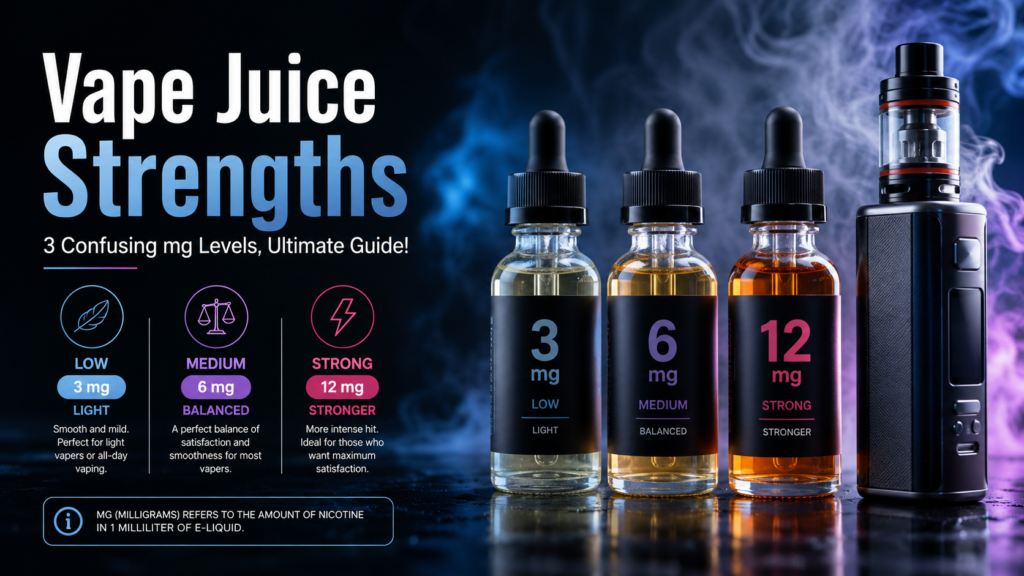
When people talk about vape juice strength, they are referring to the amount of nicotine packed into the liquid. This number is almost always shown in milligrams per milliliter, written as mg or sometimes mg/mL. So when a bottle says 12mg, it means there are 12 milligrams of nicotine in every milliliter of that liquid. The higher the number, the stronger the nicotine hit you will feel.
Milligrams and Percentages Explained
Some brands, especially those made overseas, label their bottles using percentages instead of milligrams. A 1.2 percent bottle, for example, is roughly the same as 12mg. If you ever come across a percentage on a label and are not sure how it compares, a simple rule of thumb is to move the decimal point. A 0.6 percent bottle is close to 6mg, and an 1.8 percent bottle lines up with 18mg. This small bit of math can save you from accidentally buying something far stronger or weaker than you intended.
Freebase Nicotine vs Nicotine Salts
Not all nicotine is created equal when it comes to how it feels in your throat and how quickly it hits your bloodstream. Traditional e-liquids use what is called freebase nicotine, which delivers a sharper throat hit at higher strengths. Nicotine salts, on the other hand, are smoother even at higher vape juice strengths, which is why pod systems often use salt-based liquids in the 20mg to 50mg range without feeling harsh. This is an important detail because a 12mg freebase juice and a 12mg salt nic juice strengths will not feel the same in your mouth or throat.
Vape Juice Strengths Broken Down by Level
Now that you know what the numbers mean, let’s go through the most common vape juice strength options one at a time and talk about who each one tends to suit.
0mg Nicotine Free Vape Juice
Zero milligram juice strengths contains no nicotine at all. People choose this option for a few different reasons. Some enjoy the ritual and flavor of vaping without wanting any nicotine in their system, while others use it as a final step after gradually lowering their vape juice strength over time. It is also a popular choice for cloud chasing, since the focus shifts entirely to vapor production and flavor rather than any kind of hit.
3mg Vape Juice Strength
A 3mg vape juice strength sits at the lower end of the nicotine scale and is generally chosen by former light or social smokers, meaning people who smoked occasionally rather than daily. It offers a very mild sensation, more of a gentle reminder of nicotine than a strong hit. Many long-time vapers who started with something stronger eventually work their way down to 3mg as their tolerance and habits change.
6mg Vape Juice Strength
The 6mg level is often described as a middle ground for people who used to smoke lighter cigarettes or who vaped for a while at a higher strength and are gradually stepping down. This vape juice strength still gives a noticeable throat hit in freebase form but is far gentler than what a pack a day smoker would typically need. It works well with sub ohm tanks that produce large clouds, since those devices deliver more vapor per puff and can make even modest nicotine levels feel satisfying.
12mg Vape Juice Strength
For many former smokers, 12mg becomes the sweet spot, especially in the early months after quitting cigarettes. This vape juice strength is strong enough to curb cravings for someone who smoked close to a pack a day, while still being manageable in higher wattage devices without becoming overwhelming. It sits right in the middle of the common range, which is part of why it remains one of the most frequently purchased options across most e-liquid brands.
18mg Vape Juice Strength
Once you reach 18mg, you are looking at a vape juice strength aimed at heavier smokers, generally those who went through a pack or more each day. In freebase form, 18mg can feel quite harsh on the throat, particularly when used in sub ohm devices that produce a lot of vapor with every draw. For this reason, 18mg freebase juice Strengths is usually paired with lower wattage devices or simple vape pens rather than high powered mods. Many people who need this level of nicotine now choose nicotine salt versions instead, since they feel noticeably smoother.
24mg and Higher Vape Juice Strengths
Beyond 18mg, you start entering territory mostly reserved for nicotine salts used in small pod systems. These higher vape juice strengths, often 24mg, 35mg, or even 50mg, are designed to be taken in small, quick puffs rather than the long pulls typical of sub ohm vaping. Because pod devices use less liquid and lower power, the nicotine delivery feels closer to a cigarette, which is exactly what heavy smokers transitioning to vaping tend to look for.
How to Choose the Right Vape Juice Strength for You
Picking a vape juice strength is not something you have to get perfect on the first try. Most vapers adjust once or twice before settling on what feels right, so think of your first bottle as a starting point rather than a permanent decision.
If You Are a Light or Social Smoker
If cigarettes were never a daily habit for you, starting with 3mg or 6mg is usually a comfortable choice. Going too strong at this stage often leads to dizziness, a scratchy throat, or a harsh coughing fit that can put people off vaping entirely before they even give it a fair chance.
If You Smoke a Pack a Day or More
Heavier smokers typically need to start somewhere between 12mg and 18mg to feel satisfied, and those switching to a pod system with nicotine salts might do well starting around 24mg to 35mg. The goal at this stage is to match your vape juice strength closely enough to your smoking habit that cravings do not send you running back to cigarettes during the first difficult week.
If You Are Already Vaping and Want to Adjust
If you already vape and feel like something is off, whether that is a harsh throat hit or the opposite, a lack of satisfaction, adjusting your vape juice strength up or down by one level is the simplest fix. Small changes tend to make a noticeable difference, so there is rarely a need to jump from 18mg straight down to 3mg in one step.
Vape Juice Strength and Device Type
The device you use plays just as big a role as the number on the bottle, and this is where a lot of new vapers get tripped up.
Sub Ohm Tanks and Low Juice Strengths
Sub ohm tanks are built to produce big clouds and run at higher wattages, which means they vaporize liquid quickly. Pairing one of these tanks with a high vape juice strength like 18mg in freebase form usually results in a throat hit that feels far too strong for comfort. This is why sub ohm setups are generally matched with 0mg to 6mg juice Strengths , occasionally stretching to 12mg for those with a higher tolerance.
Pod Systems and Nicotine Salts
Pod systems work the opposite way. They run at lower wattages and use smaller amounts of liquid per puff, which makes them a natural fit for higher vape juice strengths in salt form. Someone using a pod device with 6mg salt nicotine will likely feel almost nothing, while the same device loaded with 35mg salt nicotine can closely mimic the sensation of smoking a cigarette. Matching the right strength to the right device style makes a much bigger difference than most people realize.
Signs Your Vape Juice Strength Is Too High or Too Low
There are some fairly clear signals that tell you whether your current vape juice Strengths needs adjusting. If you notice a persistent scratchy throat, mild headaches after vaping, dizziness, or a lingering unpleasant taste, these can all point to a strength that is too high for your device and habits. On the other hand, if you find yourself vaping constantly throughout the day, taking unusually long or frequent puffs, or still feeling cravings similar to when you smoked, your vape juice Strengths may be too low to actually satisfy you.
Common Mistakes People Make with Vape Juice Strengths
One of the most frequent mistakes is assuming that a higher number always means a better experience. In reality, going too strong for your device often backfires and makes vaping unpleasant rather than satisfying. Another common error is sticking with the same vape juice Strengths indefinitely without checking in on whether it still fits, even as tolerance builds or habits change over months of vaping. Some people also overlook the difference between freebase and salt nicotine entirely, buying a 20mg freebase juice Strengths for a sub ohm tank and being caught off guard by just how harsh it feels compared to the same number in salt form.
Legal Age and Safety Considerations for Vape Juice Strengths
Vape juice Strengths , regardless of its nicotine content, is intended strictly for adults who have reached the legal purchasing age in their state or country. In the United States, federal law sets that age at twenty one, and reputable retailers verify age before completing any sale, whether in person or online. Nicotine is an addictive substance, and products containing it should always be stored well out of reach of children and pets, since even small amounts of concentrated e-liquid can be harmful if swallowed. If you are pregnant, have a heart condition, or have any other health concerns, speaking with a doctor before using nicotine products, including any vape juice Strengths , is a sensible step. Laws and regulations around e-liquid sales and shipping can vary by state, so checking your local rules before ordering online is worth the extra few minutes.
Frequently Asked Questions About Vape Juice Strengths
What vape juice strength is closest to a regular cigarette? Most people find that somewhere between 12mg and 18mg in freebase form, or around 25mg to 35mg in nicotine salt form, feels closest to a traditional cigarette, though this varies from person to person depending on how heavily they smoked.
Can I mix two different vape juice strengths together? Yes, mixing a higher strength bottle with a 0mg bottle is a common way to create a custom strength that falls between standard options, as long as both liquids use the same base type and flavor profile you are comfortable combining.
Does vape juice strength affect flavor? Higher nicotine levels can sometimes dull flavor slightly and add a peppery sensation, which is one more reason many vapers prefer to use the lowest vape juice strength that still satisfies their nicotine needs.
How often should I change my vape juice strength? There is no fixed schedule. Many people reassess every few months, especially if they notice signs that their current level is too strong or too weak, and gradually stepping down over time is common among those working to reduce their nicotine intake.
Final Thoughts on Choosing the Right Vape Juice Strength
Understanding vape juice strengths does not need to feel complicated once you know what the numbers actually represent and how they interact with different devices. Whether you land on 6mg, 12mg, 18mg, or something outside that range entirely, the right choice comes down to your smoking history, the device you use, and how your body responds. Taking the time to match your vape juice strength to your actual needs, rather than guessing, makes the entire vaping experience far more enjoyable and far less likely to end in frustration.